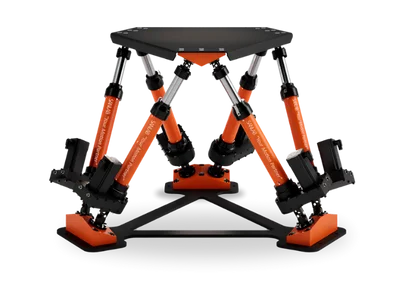
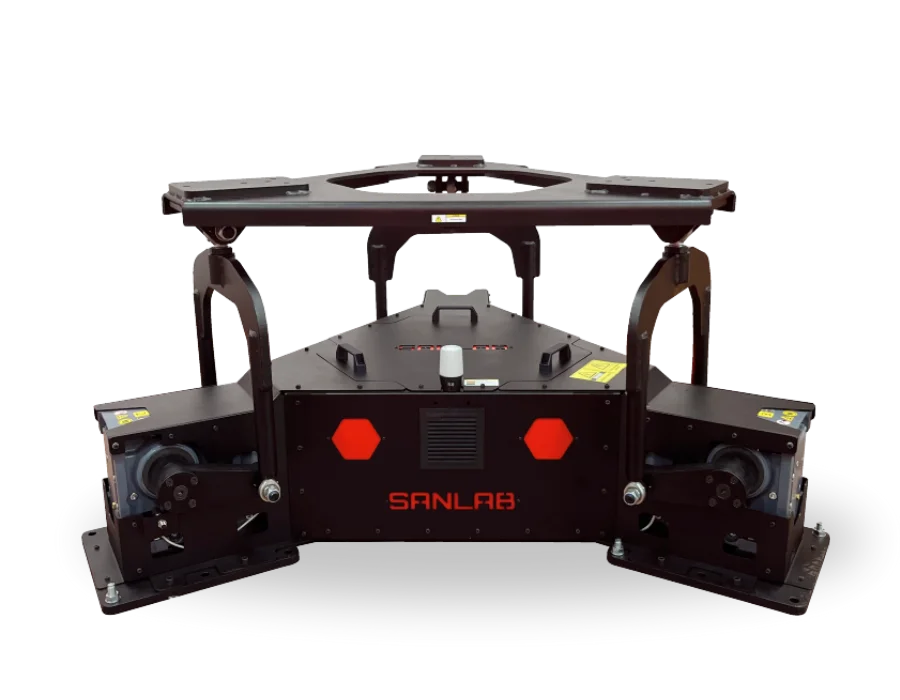
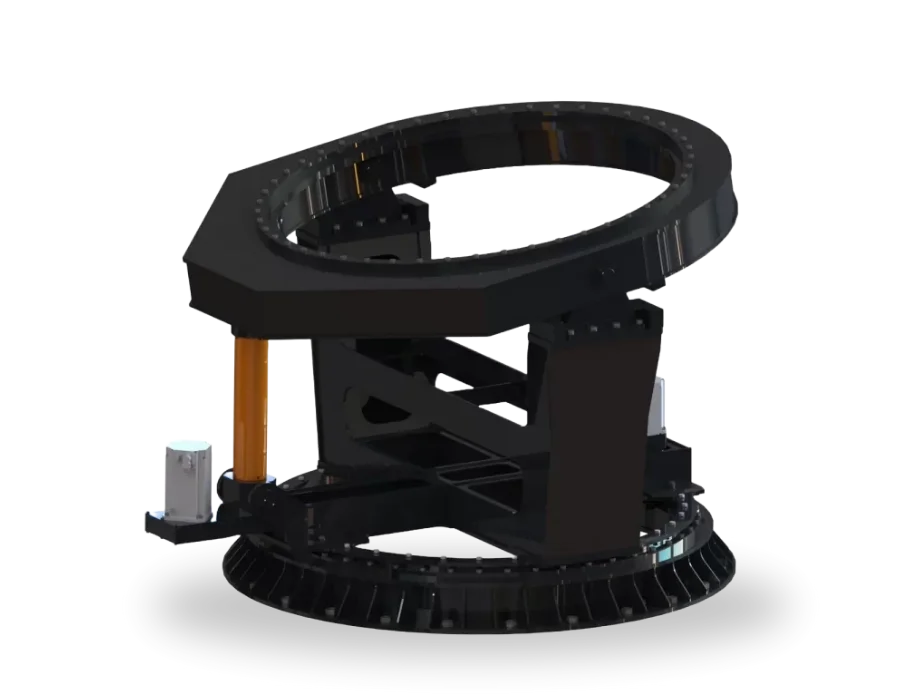
SANLAB develops industry leading motion platforms designed for high fidelity simulation, professional testing, and research applications. Our range of systems, including 6DOF (Stewart Platforms), 3DOF, and 2DOF configurations, provides precise and dynamic movement across various payload scales. Whether for defense R&D, automotive testing, or immersive training, our motion systems deliver uncompromising accuracy and real time response.
Every SANLAB motion system is a product of advanced robotics and precision engineering. Our platforms utilize high performance electro mechanical actuators, which provide superior accuracy compared to traditional hydraulic systems.
Payload Versatility: From lightweight testing at 50 kg to heavy duty industrial loads of 25,000 kg.
Real Time Integration: Seamlessly syncs with simulation software for immediate physical feedback.
Durable Design: Engineered for longevity in harsh testing and training environments.
Customized Solutions: Ability to tailor stroke, velocity, and payload specs to unique project requirements.
A motion platform is a robotic system that uses high performance actuators to replicate physical movement in various axes. By processing real time data from simulation software, these platforms move to simulate the exact forces and sensations of a vehicle or environment, providing a high fidelity experience for testing and training.
The choice depends on the required complexity of movement. 6DOF systems offer total freedom in all directions (surge, sway, heave, roll, pitch, yaw) and are ideal for advanced provide three axis movement for dynamic simulation, while 2DOF platforms are engineered for balanced performance and extremely high payload capacities.
6DOF (Degrees of Freedom) platforms provide movement in all linear and rotational axes (surge, sway, heave, roll, pitch, yaw), while 3DOF platforms typically focus on three specific axes (like pitch, roll, and heave) for simpler simulation needs.
Yes, we specialize in tailoring our motion platforms to meet unique project specifications, including custom stroke lengths, velocity requirements, and environmental protection like IP66 for harsh conditions. Every system is designed for seamless integration into existing defense, automotive, or industrial infrastructures.