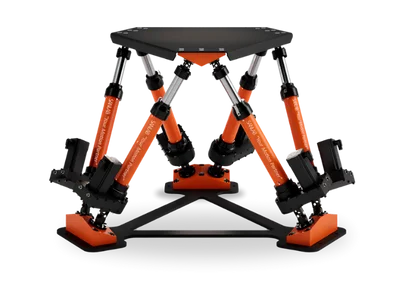
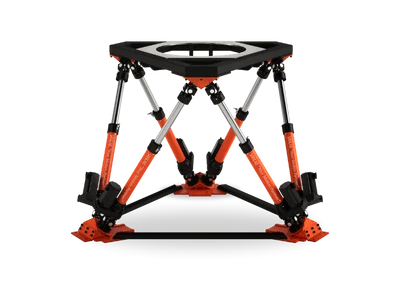
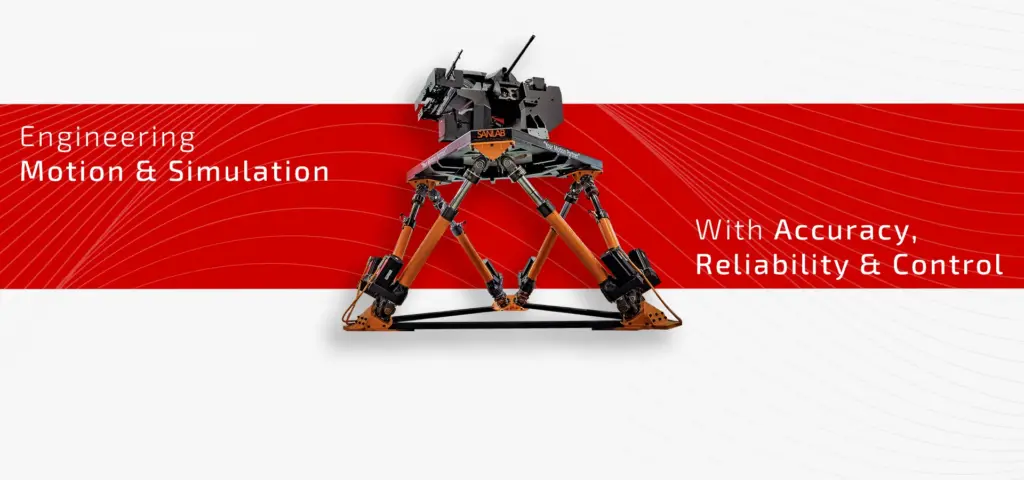
SANLAB medium motion platforms utilize high precision hexapod Stewart architecture to deliver full 6DOF performance for advanced simulation and industrial testing. Engineered for mid range versatility, these high fidelity systems are optimized for payloads ranging from 500 kg to 2500 kg, making them the ideal solution for professional flight simulators, mid weight vehicle training, and complex industrial R&D.
Whether for immersive training environments or rigorous prototype evaluation, our medium motion platforms provide the responsive control and stability required for high stakes applications where precision and reliability are paramount.
This product group supports a wide range of capacities starting from 500 kg and reaching up to 2500 kg. This versatility allows for the integration of complete vehicle shells, heavy turret assemblies, and complex industrial test rigs that require significant structural support and dynamic stability.
Our platforms are optimized for the rigorous testing of RCWS, radar arrays, and electro optical systems. They provide a precise base to analyze recoil forces, targeting consistency, and sensor stabilization under authentic movement profiles, ensuring high performance results during hardware validation and field ready assessments.
Yes, medium platforms deliver the necessary torque and precision required to move heavy camera rigs and large set pieces. They facilitate seamless synchronization between physical motion and digital environments, providing the authentic movement profiles essential for high end cinematography and complex special effects integration.
The hexapod design provides superior rigidity and 6DOF control even when supporting a 2500 kg payload. This architecture ensures that complex multi axis motion is executed with millisecond precision, maintaining system stability during demanding engineering trials and high stakes structural evaluations where accuracy is non negotiable.
Models such as the SMOTION1500 and SMOTION2500 feature expansive mounting surfaces and high moment of inertia ratings specifically for complete vehicle cabins and turret assemblies. This allows for comprehensive system level validation and prototype testing within controlled research environments before final field deployment.